REGENCY NEWS

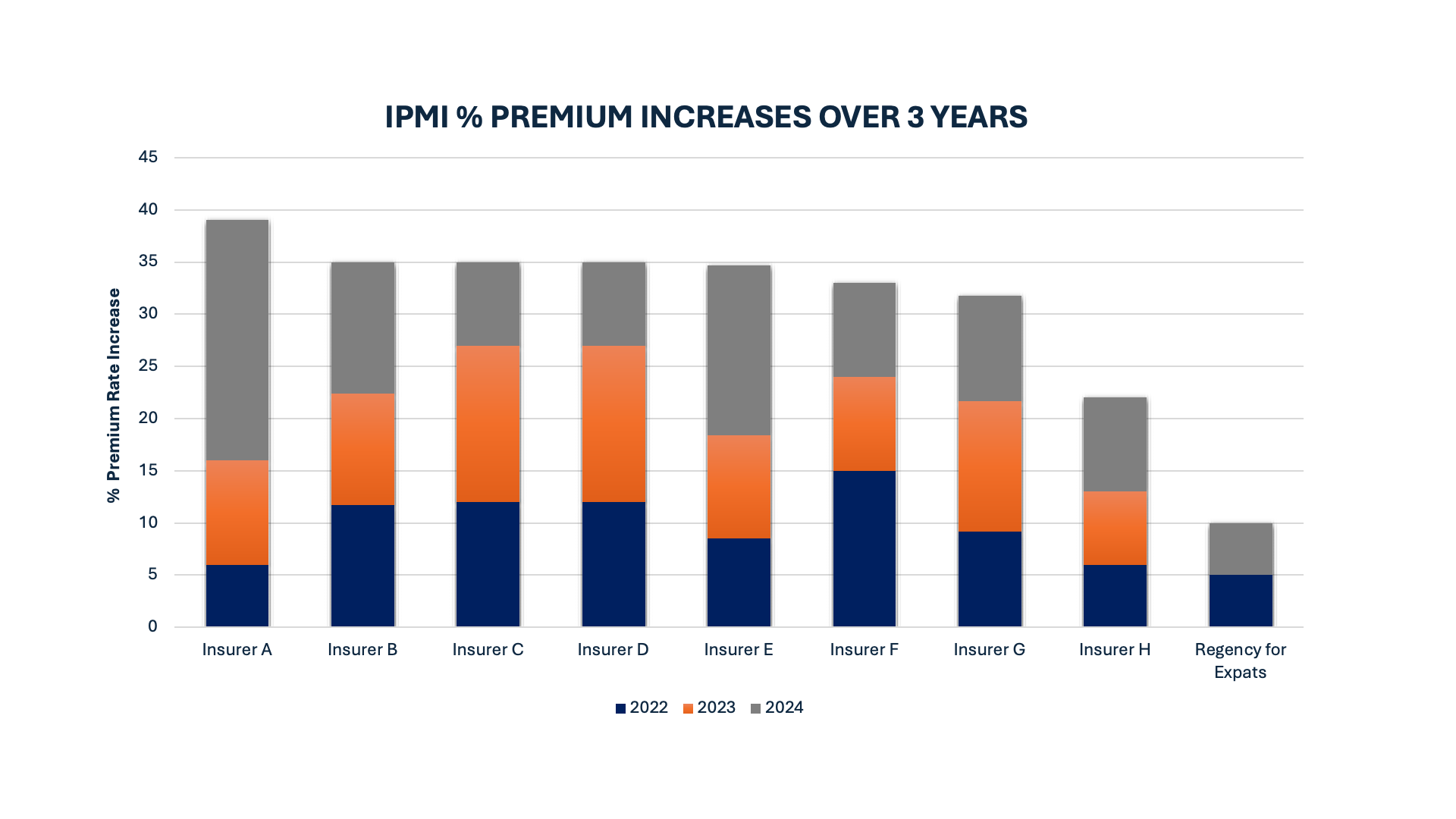
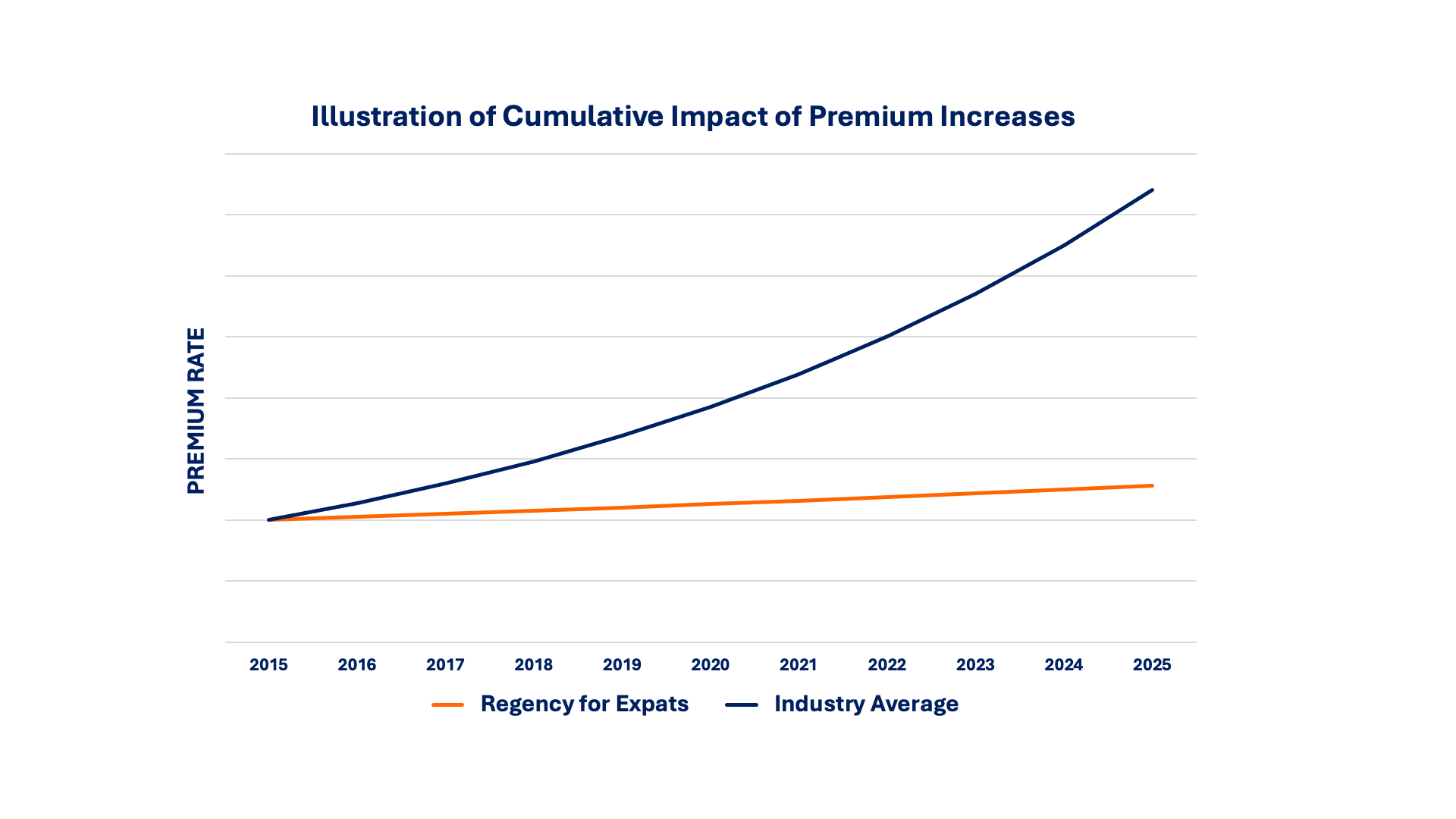
Over the past ten years, Regency’s disciplined approach to premium rate setting has resulted in an average annual premium increase of only 2.5 percent, remaining well below wider market trends. The company has prioritised long-term pricing stability for members, despite sustained cost pressures across the international insurance market.
Since 2019, rising healthcare costs have become a structural feature of the global insurance environment. Across international markets, many insurers have responded with repeated premium increases to offset these pressures. Regency has continued to demonstrate pricing restraint, freezing premiums twice, most recently in 2025.
The chart below illustrates this, comparing Regency for Expats premium rate movements with broader market trends in recent years.
Value That Encourages Long-Term Membership
For individuals and families, premium stability matters because healthcare is a long-term commitment. As general costs of living continue to rise, customers are increasingly looking for insurance that remains affordable over time without sacrificing quality or security.
The following graph shows how even modest annual increases compound significantly over ten years, contrasting broader market trends with Regency for Expats’ controlled premium movement.
Built on Insurer Control
A key factor behind Regency’s ability to maintain stable pricing is that it is the insurer behind the plan, setting the guidelines for underwriting and pricing approach. This allows decisions to be made with long-term member sustainability in mind, rather than being driven by external targets or short-term commercial pressure.
Premium stability is further supported by careful cost control, prioritising investment in efficient operations and service delivery over high-cost activity such as brand marketing. By keeping overheads controlled, this focus allows greater investment in cover, service, and long-term affordability for members.
Grounded in Financial Strength
This approach is underpinned by strong financial foundations. In June 2025, Regency achieved an independent Financial Strength Classification of STRONG, reinforcing the governance, resilience, and long-term sustainability behind every plan it underwrites.
Commenting on this approach, Stephen Coughlin, Director at Regency Assurance, said: “Our focus has always been long-term sustainability. Having control over pricing allows us to manage rising costs responsibly and deliver fair, dependable cover for our members.”
Read more about the financial foundations that support this approach here:
Regency Assurance Financial Certification 2025
Cost pressures show little sign of slowing. According to WTW’s (formerly Willis Towers Watson) 2026 Global Medical Trends Survey, healthcare costs are expected to rise again in 2026. Through its position of financial strength, Regency will continue prioritising pricing stability, supporting highly competitive premiums year on year.

Hip replacement insurance: A personal story
By Mark Desmond Hughes, a Regency for Expats Member

Fast Track Claims Service: A Decade of Streamlined Claims Processing
Celebrating 10 Years of Speed, Efficiency, and Exceptional Service: Since its introduction in 2015, Regency's Fast Track Claims Service has been at the forefront of our commitment to delivering swift and hassle-free claims processing. Over the past decade, this innovative service has ensured that our members receive their claim payments as quickly as possible, reducing financial stress during critical times.

Regency Supports Queen City Initiative to Empower Young Female Athletes
Regency Assurance is pleased to spotlight the success of the Queen City Youth Development Program, a powerful initiative designed to uplift and inspire young female athletes across Nevis. Delivered through Regency’s partnership with the Department of Youth, this program demonstrates the meaningful impact that committed youth leaders and community-focused action can have on building confidence, opportunity, and the foundations for continued growth in sport.
